Kakheti: Georgia's wine country
8,000 years of qvevri winemaking, Sighnaghi, Bodbe and Telavi — when the harvest is, and how to get into the good small wineries.
Why this region matters
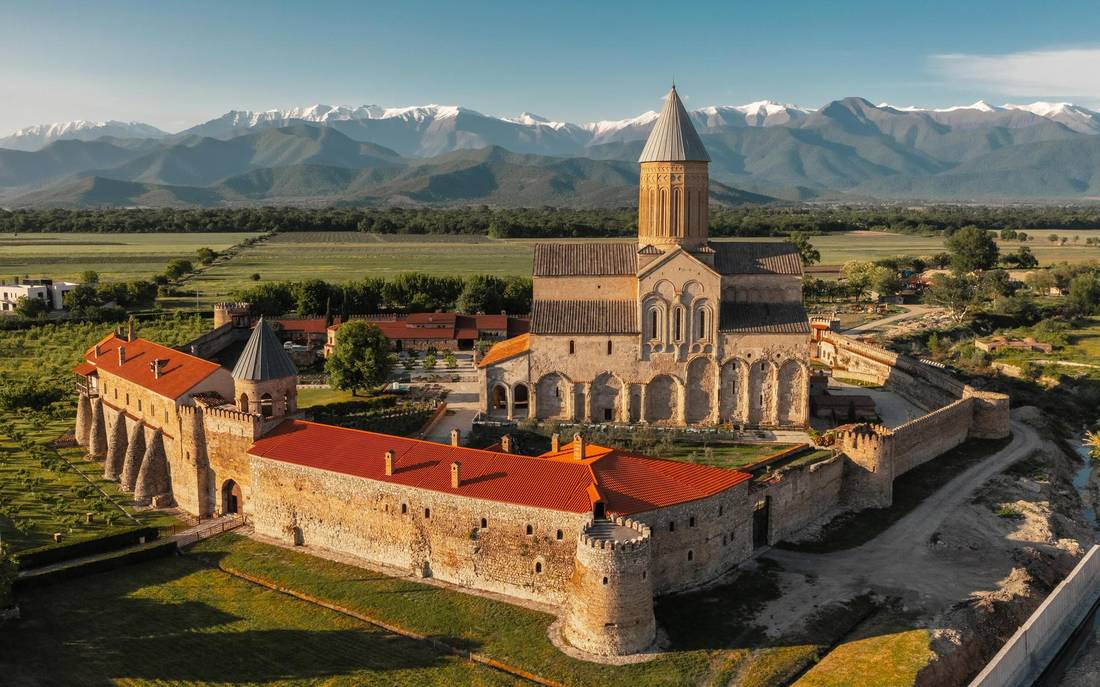
Kakheti, in the east against the Caucasus, is where most of it happens. This is not a region that built a wine industry for tourists; it is a region where almost every family has made wine for as long as anyone can trace, and the tourism arrived afterwards.
Sighnaghi, Bodbe and Telavi
Bodbe Monastery is a few minutes away, in cypress gardens, and holds the grave of St Nino, who brought Christianity to Georgia in the fourth century.
Telavi is the working capital of the region — less picturesque than Sighnaghi, more Kakhetian, and the better base if you intend to spend two or three days here rather than one.
How to actually visit the wineries
Book ahead, by phone or through someone who can call in Georgian. The large commercial cellars take walk-ins and give you a standard tasting. The small family producers — the ones you came for — need notice, and when they have it they will open several bottles, take you down to the qvevri and talk for two hours.
Ask for amber wine. White grapes fermented on the skins in qvevri, which is the style Georgia is known for and which tastes like nothing you have had elsewhere. Saperavi is the red to know.
Do not drive. Tastings here are generous and refusal is not really understood. Take a driver — it costs less than you think and removes the only real risk of the day.
Eat. Kakhetian food with Kakhetian wine, at a table, slowly. If you are offered a supra with a tamada leading toasts, cancel whatever was next.
When to go
May and June are green, quiet and comfortable, and everything is open without the harvest crowds.
Summer is hot on the valley floor. Winter is cold and many small producers are simply not receiving visitors.
Common questions
Can I visit Kakheti as a day trip from Tbilisi?
Yes — it is ninety minutes to two hours each way and a day gives you Sighnaghi, Bodbe and two wineries. Two days lets you slow down, which is what the region is for.
What is qvevri wine?
Wine fermented and aged in large clay vessels buried in the ground, a method used in Georgia for thousands of years and listed by UNESCO as intangible cultural heritage. White grapes made this way produce amber wine.
Is there anything in Kakheti for someone who does not drink?
Yes. Sighnaghi's setting, Bodbe monastery, the Alazani valley views, the food and the Tsinandali estate all stand on their own. Many wineries also press excellent grape juice and make churchkhela.
Figures checked September 2026 against Colliers Georgia, Galt & Taggart, TBC Capital and Georgian government sources. Rules change; confirm anything you are about to act on.