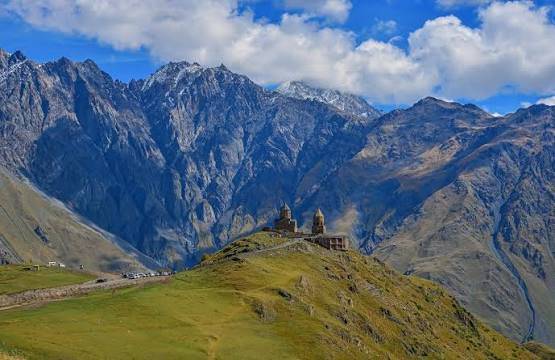
The Gudauri–Kobi stretch can shut to everything, without notice
On 10 February 2026 the Roads Department of the Ministry of Infrastructure suspended all traffic on the Gudauri (Post)–Kobi section of the Mtskheta–Stepantsminda–Larsi highway, between kilometre 93 and kilometre 107, because of high avalanche danger. The wording was absolute: movement of all types of vehicles prohibited until further notice, with the Mleta–Gudauri section open only as non-stop transit. That closure is over, but the mechanism behind it is not seasonal politeness — it is the standing reality of the only road north, and it is the single largest planning risk in a Kazbegi winter itinerary.
Fourteen kilometres with no alternative
The restricted stretch ran from kilometre 93 to kilometre 107 — fourteen kilometres of the Military Highway, and the only way through. There is no parallel route around the Jvari Pass: a closure there does not reroute traffic, it stops it. For a visitor, that means Stepantsminda is not a place you can be confident of leaving on a chosen day in February, and for a host up there it means guests can be both unable to arrive and unable to depart. Both halves of that need to be in the booking conversation rather than discovered at the time.
Non-stop transit is a condition, not a courtesy
The detail worth noticing in that February notice is the treatment of the Mleta–Gudauri section: open, but only as non-stop transit. That is a specific instruction, and it rules out exactly the thing a tour vehicle normally does on that road — stopping for photographs at the viewpoints, waiting out weather, letting passengers get out. An itinerary that depends on viewpoint stops between Mleta and Gudauri is an itinerary that can be legally cancelled mid-route while the road is still technically open. Operators building winter products on that stretch should have a version of the day that works without any stops at all.
How to build a Kazbegi winter trip that survives a closure
Three things follow from the way these restrictions are issued. They come from the Roads Department rather than from a hotel or a tour desk, so the authoritative word is the department's, not your driver's optimism. They are issued until further notice, which means there is no published reopening time to plan against. And they are triggered by avalanche danger, which means they cluster in exactly the weeks the skiing is best. A trip built accordingly keeps a spare night in the budget on both sides of the mountain, avoids putting an onward flight on the same day as the return drive, and treats a refundable booking in Stepantsminda as worth paying for.
Written by us from the source linked above, not investment, legal or tax advice. Figures and rules change — confirm anything that matters before acting on it.