Gulf visits to Georgia reached 145,513 in 2025, and they are spreading beyond summer
The Georgian National Tourism Administration puts visits from the six Gulf Cooperation Council states at 145,513 in 2025, up 3.4% on 2024. The administration also says the pattern is becoming less seasonal, with more arrivals in autumn, winter and spring, and Khaleej Times reported in July 2026 that airlines operate around 49 flights a week between Georgia and the UAE. For hosts and operators, the interesting part is not the growth rate but the months it is arriving in.
A figure to keep in proportion
145,513 visits from the whole Gulf in a year is a modest share of Georgia's overall visitor numbers, which run in the millions. That is worth saying plainly, because the Gulf market is often discussed here as though it were the main story. It is not, in volume. What makes it worth attention is composition: these are long-haul visitors who fly rather than drive, who book accommodation rather than stay with relatives, and who in many cases are travelling as families, which changes what they need from a property. A market that is small in headcount can still be the one that fills the apartments with three bedrooms.
The seasonality shift is the actual news
The tourism administration says Gulf visits are becoming less concentrated in summer, with more arrivals in autumn, winter and spring. If that holds, it addresses the single hardest problem in Georgian coastal and mountain property: the dead months. A Batumi flat that earns well in July and August and nothing in November is a different investment from one that earns moderately for nine months. Nobody should price next year's calendar on this alone, because the administration is describing a direction rather than publishing a monthly series, but it is the kind of change that is worth testing with your own booking data before the next season is set.
Where the Gulf market actually goes
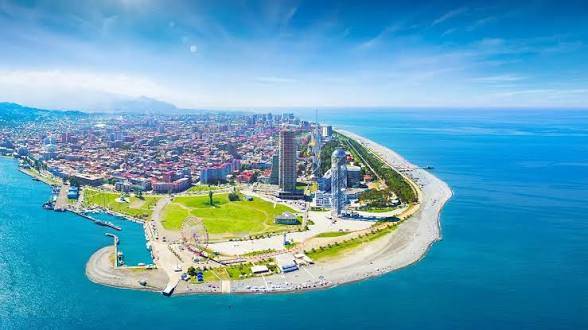
Khaleej Times describes Tbilisi as the main entry point and Batumi as the summer draw, then lists three other things Gulf visitors come for: hiking in Svaneti and the Greater Caucasus; wellness at Borjomi, Tskaltubo and Sairme; and snow, naming Gudauri as the leading international resort alongside Bakuriani, Mestia and Goderdzi. The wellness line is the one most often missed by people planning for this market. Tskaltubo and Sairme are not on the standard summer itinerary and they operate on a different calendar from the coast, which is exactly why they feature in a story about visits spreading across the year.
Forty-nine flights a week is the constraint and the opportunity
Around 49 flights a week between Georgia and the UAE, as reported in July, is a lot of capacity for a market of this size, and it is the reason the Gulf numbers can move at all. Air capacity is the real gate on a long-haul market: a route added or dropped changes arrivals faster than any marketing campaign. For a tour operator or a host, that means the thing to track is the airline schedules rather than the annual visitor statistic, because the schedule is published months before the visitors appear and the statistic is published a year after they have gone.
Written by us from the source linked above, not investment, legal or tax advice. Figures and rules change — confirm anything that matters before acting on it.