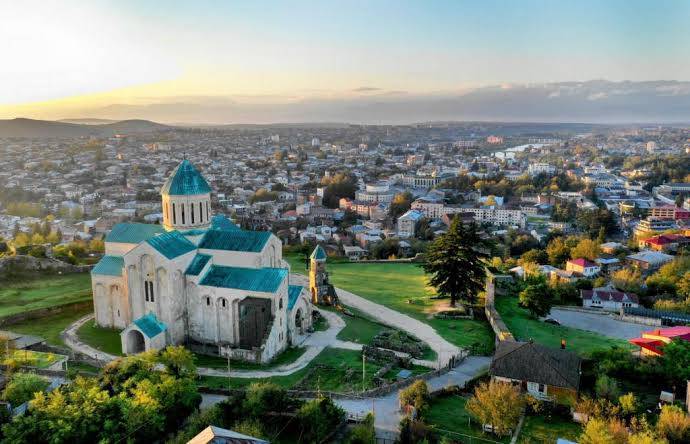
Facade and fence rules stopped being advice on 1 July — and Tbilisi is outside them
Government Decree 547, adopted on 18 December 2025, sets rules for the aesthetic characteristics of buildings: roofs, facades, fences, colour palettes and how a building sits in its street. Its requirements were recommendatory until 1 July 2026. Failure to meet them is a ground for refusing a building permit or rejecting a construction notification. The decree applies across Georgia with three carve-outs: Tbilisi, cultural heritage protection zones and places of worship. Tbilisi was asked to adopt its own consistent rules.
What the decree asks for
An architectural project now has to include visual material showing the roof, the facades, the fences, the materials and the colours. Roof and facade materials and colours are to be chosen from the palette in the decree's first annex, and the applicant is expected to survey the surrounding area first to establish which materials and colours already prevail there. Local traditional materials are allowed even where they fall outside the annexed palette, which is the clause that keeps regional building practice from being ruled out by a national colour chart. Facades, fences and colours have to suit their surroundings, and roof forms have to suit the skyline of the place.
Fences get their own paragraph
The decree treats fences as a distinct subject rather than a detail. They belong on the street-facing side, should take simple straight forms, use matte colours and approved materials, and avoid a dominant structural frame. Living hedges are permitted, and so are local traditional materials. The Spatial and Urban Development Agency was asked to publish sample fence designs on its website within ten days of the decree. If you are building a house on a plot anywhere outside the capital, the fence is the element most likely to have been designed last and the one the decree is most specific about, which makes it the easiest thing to get wrong on a submission.
The three places it does not reach
The decree excludes Tbilisi, cultural heritage protection zones and places of worship, and it asks Tbilisi municipality to adopt its own rules consistent with it. That is the detail most likely to be reported wrongly, because the measure was announced as a nationwide standard and in substance it is one, but the capital is governed by whatever Tbilisi adopts rather than directly by this text. For a developer working in both the capital and a regional city, the practical consequence is two sets of paperwork rather than one, and a design that satisfies a Kutaisi or Telavi municipality is not automatically compliant in Tbilisi.
What to do if you are filing now
The transitional clause says the requirements were recommendatory until 1 July 2026, and that proceedings begun before that date finish under the rules in force when they started. It also states that municipal acts cannot conflict with the decree and must be consistent with the agency's opinion. The record on the Legislative Herald lists a later amending decree, No. 275 of 18 June 2026, so the text has already been changed once since adoption. Anyone preparing a submission should read the current consolidated version rather than the December announcement, and should ask the municipality which annex palette it is applying before the drawings are finished rather than after.
Written by us from the source linked above, not investment, legal or tax advice. Figures and rules change — confirm anything that matters before acting on it.