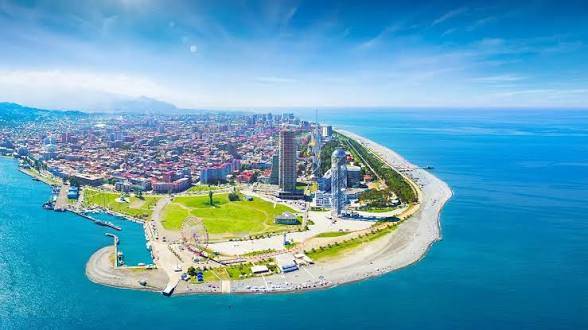
In Batumi, foreign buyers took half the resale market — and outnumbered Georgian buyers on both sides of it
Market figures reported for February 2026 put foreign buyers at a 50% share of Batumi's secondary market, with their transaction share above that of Georgian buyers in both the primary and secondary markets. Foreign buyer transactions were up 53.9% year on year in the primary market and 47.6% in the secondary. The weighted average new-build price was 1,334 dollars a square metre, 12.6% higher than a year before — though the reporting itself cautions that late registration of primary-market deals distorts that growth rate.
What a 50% foreign share actually changes for a seller
If half the buyers on the resale side are foreign, the way a flat should be presented changes before the price does. Those buyers are more likely to be comparing Batumi against a coastal market somewhere else rather than against the next district along, more likely to be buying remotely or on a short visit, and far more likely to care about whether the building has a management company, what the service charge is, and whether the title can be transferred without them being in the country. A listing that answers those three questions in writing is doing work that a photograph cannot.
Read the price rise with the warning attached to it
The reported 12.6% rise in the weighted average new-build price comes with an explicit caveat in the same reporting: primary-market transactions are sometimes registered late, and a deal agreed months ago at an older price can land in a later month's figures. That pushes the apparent growth rate around without anything changing on the ground. Primary prices were reported up 23.2% and secondary up 6.9%, and the gap between those two is itself a hint that the primary number is carrying more registration noise than the secondary one. For a seller of an existing flat, the 6.9% figure is the more relevant of the two.
New flats are selling and old ones are not, at least by count
The split inside the same market is the most useful thing in these figures. Newly built apartment transactions were up 22.7% year on year, while transactions in older apartments fell 12.8%. That divergence tells an owner of a Soviet-era flat something a city-wide average never would: the competition they face is not only other old flats but a pipeline of new ones that buyers are choosing instead, often at a higher price per square metre for a smaller, better-finished unit. Pricing against the new-build figure is a mistake; pricing against what actually transacted in older stock nearby is the exercise.
A market this concentrated in one buyer type has one obvious risk
Foreign demand is good for prices while it lasts and it is the first thing to go when it stops. It responds to currency moves, to visa and residence rules, to flight connections and to what is happening in the buyers' own countries, none of which Batumi controls. An owner weighing whether to sell now or hold should at least know which buyer their exit depends on. If the answer is a foreign buyer, then the questions worth tracking are the ones about entry rules and air links, not the ones about local wages.
Written by us from the source linked above, not investment, legal or tax advice. Figures and rules change — confirm anything that matters before acting on it.