2026-11-04 · Investment & ROI
A forecast puts Batumi flat yields at 3.4-5.1%, and hotel rooms at 10-17%
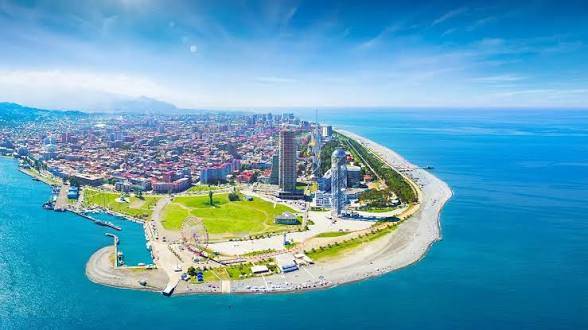
Georgia is completing more flats than it ever has. Galt & Taggart's numbers say the apartment that yielded 10% in 2023 is on course for a third of that, while hotel rooms are forecast to earn multiples of it.
The supply wave, in units
Galt & Taggart's construction outlook, published in April 2026, puts 2026 at the peak: roughly 35,000 residential units completed in Tbilisi and up to 18,000 in Batumi. For scale, Tbilisi ran between 16,000 and 21,000 units a year from 2020 to 2025, and Batumi went from about 2,000 units in 2020 to 13,000 in 2025. The forecast then eases — Tbilisi at 27,000 in 2027 and averaging 25,000 a year in 2028 and 2029, Batumi at about 14,000 in 2027 and about 12,000 a year after that. Even the slower years are above the recent normal. Permits, the leading indicator, hit a national record of 12 million square metres in 2024 and came in at 11.4 million in 2025, of which 77% was residential.
What that does to the rent you can charge
The yield arithmetic follows from the unit count. Gross yields on Batumi apartments fell from 10% in 2023 to 7.4% in 2025, and Galt & Taggart forecasts a range of 5.1% down to 3.4%. Net yields on apartments, after costs, typically run 3-4% and the brokerage's scenario has them dropping to 1.5-2%, or close to nothing, if the apartment stock doubles. Those are projections rather than observed numbers, and the most useful thing about them is the direction and the mechanism: a lot of near-identical flats delivered into the same rental pool in the same two years, with buyers who mostly bought to let.
The hotel-room gap
The same outlook estimates net yields on hotel rooms at 10-17%, which is several times what it expects from apartments. That is not a free lunch, and it is worth being clear about why the figures differ. Hotel-room products are sold with management attached, their income is seasonal and depends on an operator's occupancy and rate discipline, the fee structure takes a share before you see anything, and the exit market for a single hotel unit is much thinner than for a flat. The gap is real, but it is a gap between two different businesses — one is renting out a property, the other is buying into someone else's trading operation. The relevant questions are who operates it, what the fees are, how the pool is shared, and what happens if the operator leaves.
Costs are moving too
On the supply side the squeeze is not only on rent. Construction costs were expected to rise about 8% across 2026 with wages up about 9%, and construction and renovation materials revenue was put at $5.9 billion in 2025 and forecast at $6.3 billion in 2026. For a developer that means thinner margins on anything priced a year ago; for a buyer it means off-plan prices have a floor under them that is rising, even in a market where completed-flat yields are falling. Those two facts are often quoted against each other as though only one can be true. Both can be: construction gets dearer while rental returns thin out, and the result is pressure on everyone in the chain rather than a clean signal to buy or to sell.
Source: International Investment (Galt & Taggart forecast) · Also see: Galt & Taggart, Geostat — National Statistics Office of Georgia
#yields #Batumi #supply #hotels
Written by us from the source linked above, not investment, legal or tax advice. Figures and rules change — confirm anything that matters before acting on it.
Ask us about this
Every post here is general. Send the city, the budget or the dates and we will answer for your case.
WhatsApp NewsRead next